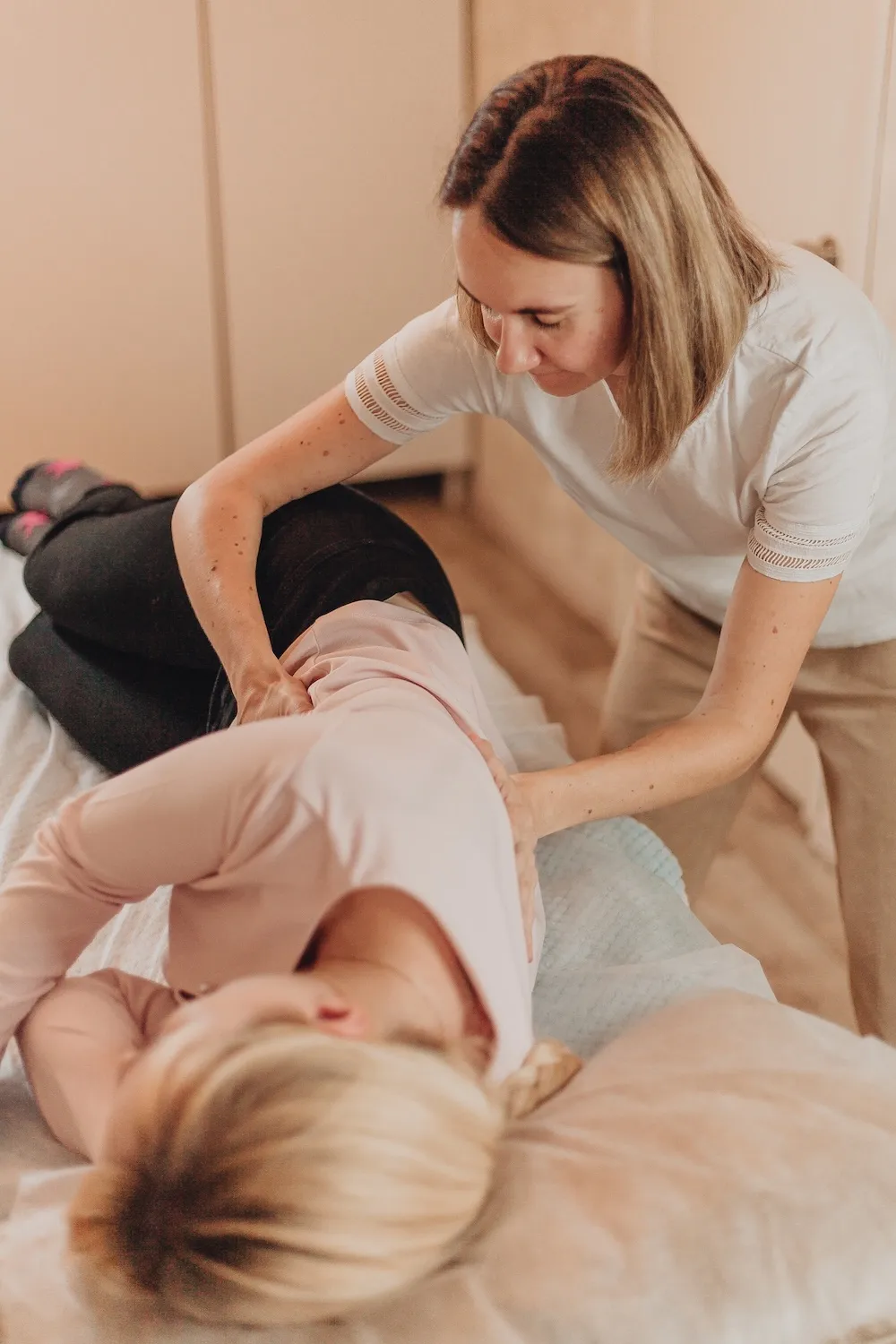
What I most often help pregnant women with
Your body changes every day. New sensations, new questions, and sometimes new difficulties. Much of what arises during pregnancy is considered "normal", but that doesn't mean you simply have to endure it.
Here is what pregnant patients most commonly come with:
- Back and pelvic pain
- Leg swelling
- Headaches
- Heartburn and digestive problems
- Insomnia and fatigue
- Anxiety and tension
- Breech or transverse presentation of the baby
Osteopathy is a gentle and safe way to feel better during pregnancy. I use only delicate techniques: craniosacral therapy, fascial techniques, soft tissue work. Safe at any stage of pregnancy.
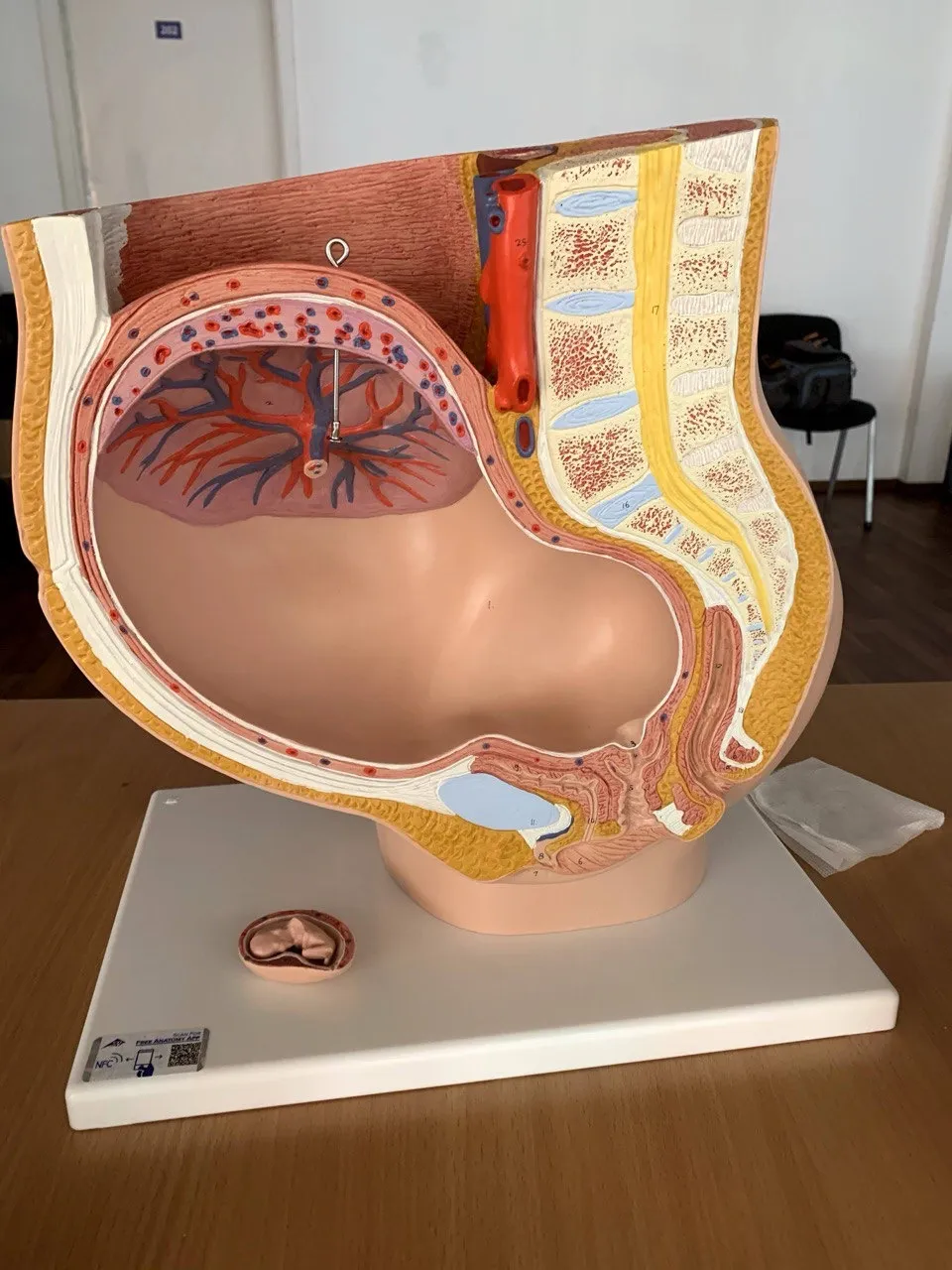
I help at every stage
First trimester (1–12 weeks). During this period I most often work with morning sickness, headaches and bodily tension. Usually 1–2 sessions are enough. I recommend coming when symptoms appear.
Second trimester (13–27 weeks). The body is actively changing: the belly grows, the centre of gravity shifts, back and pelvic pain appears. I help the body adapt to these changes. This is the optimal time to come — for the best effect and a smoother course of the rest of pregnancy.
Third trimester (28–40 weeks). Preparing for birth: I work with the pelvis, sacrum and diaphragm. I help with swelling and pain. If the baby is in breech position — this is the best time to come. During this period it is optimal to come every 2–3 weeks.
General recommendation: 1–2 sessions per trimester.
Back and pelvic pain
This is the most common complaint during pregnancy. The growing uterus shifts the centre of gravity, the hormone relaxin softens the ligaments, and the load on the spine and pelvis increases with every week.
What women describe:
- Lower back pain — a pulling, aching sensation that worsens towards the evening
- Sacral pain — particularly after prolonged standing or walking
- Symphysis pubis dysfunction — pain at the pubic joint, difficulty spreading the legs
- Sciatica — a shooting pain from the lower back down the leg
An osteopath works with the pelvis, sacrum, lumbar spine, and diaphragm. The aim is to restore balance, release tension, and allow the body to distribute load more effectively.
Many women notice relief after the very first session. But it is important to understand: the body continues to change, and periodic support helps you navigate these changes with less discomfort.
Headaches
Headaches during pregnancy are a common complaint, especially in the first trimester. There are many possible causes: hormonal changes, neck and shoulder tension, poor sleep, dehydration, stress.
Another frequent cause is postural change. The growing belly shifts the alignment of the spine, the shoulders tense up, and the muscles of the neck and back of the head stay under constant load. This tension radiates into the head.
An osteopath works with the cervical and thoracic spine, releases the shoulder girdle, and uses craniosacral techniques to restore the free flow of fluids around the skull. Many patients feel relief already after the first session.
When to see a doctor urgently: a sudden, very severe headache combined with visual disturbances, nausea or elevated blood pressure can be a sign of preeclampsia. Don't delay a visit to your gynecologist.
Morning sickness, heartburn and digestion
Morning sickness. Nausea in the first trimester can be linked to heightened sensitivity of the vagus nerve. Craniosacral therapy helps reduce irritation of the nervous system and lessen the intensity of nausea.
Heartburn. The growing uterus pushes the stomach upward, and pressure on the diaphragm increases. An osteopath works with the diaphragm and thoracic region, helping to relieve compression and ease symptoms.
Constipation. Hormonal changes slow the bowel. Gentle visceral techniques help improve motility — without any pressure on the uterus.
Osteopathy does not replace diet or your doctor's recommendations, but it complements them — working directly with the body.
Swelling
Swelling during pregnancy is common, particularly in the third trimester. Blood volume increases, hormones cause fluid retention, and the growing uterus compresses the veins in the pelvis, impeding blood flow from the legs.
When to see your doctor urgently: sudden swelling of the face and hands, especially in combination with headache and raised blood pressure — this may be a sign of pre-eclampsia. Do not delay a visit to your gynaecologist.
If the swelling is the usual, moderate kind — an osteopath can help. Work with the diaphragm, pelvis, and thoracic region improves venous and lymphatic drainage. Many patients notice their legs feel lighter after a session.
Anxiety, insomnia and fatigue
Pregnancy is not only the joy of anticipation. It also brings anxiety: is the baby all right, how will the birth go, will I cope? Anxiety is not a weakness. It is a normal response to enormous change in life.
The problem is that stress and anxiety create tension in the body, and tension in the body amplifies stress. A vicious cycle results: anxiety — tightness in the neck, shoulders, and diaphragm — more anxiety — more tension.
Osteopathy helps break this cycle. Gentle bodywork releases physical tension, allowing the nervous system to shift out of "fight or flight" mode and into a state of recovery.
I use SomatoEmotional Release (SER) — it helps address emotional tension held in the body. This is not psychotherapy; it is gentle somatic work that helps release deep-seated tension.
The results patients report: better sleep, less anxiety, more energy and inner resource.
Breech and transverse presentation
After 32 to 34 weeks, a baby usually settles into a head-down position — the optimal position for birth. But in roughly 3 to 4% of cases, the baby remains in breech (bottom down) or transverse presentation.
Why can an osteopath help? The baby's position depends not only on their "willingness to turn", but also on the space available in the uterus. If the mother's pelvis is asymmetric, the uterine ligaments are unevenly tensioned, or the diaphragm is restricted — it is physically difficult for the baby to turn.
An osteopath addresses these restrictions:
- Restores pelvic symmetry
- Releases tension in the uterine ligaments
- Works with the diaphragm — creating more space for the baby
I do not turn the baby with my hands. I help the body create the conditions in which the baby can turn on their own.
The best time for this is between 32 and 36 weeks. Later on, there is less room to turn. And of course, there is no guarantee — sometimes there are objective reasons why a baby remains in breech presentation. But it is well worth trying.
Preparing for birth
Birth preparation in osteopathy means working with the body so that it is as ready as possible for the process of labour and delivery.
The pelvis. During labour, the baby passes through the pelvis. The more mobile the pelvic bones and sacrum, the easier this passage. An osteopath assesses and, where necessary, restores mobility in all the pelvic joints.
The pelvic floor. The pelvic floor muscles need to be supple — able to relax at the right moment. An osteopath works with the pelvic floor gently, through the surrounding tissues.
The diaphragm and breathing. Proper diaphragmatic breathing helps cope with contractions. If the diaphragm is restricted, breathing becomes shallow, and managing the pain becomes harder. An osteopath helps release the diaphragm.
It is best to start preparation from 32 to 34 weeks. Usually two to three sessions before the expected date of birth is sufficient.
As a former midwife, I know what happens during labour. I understand the biomechanics of the birth process and prepare the body for exactly what it is about to face.
My experience working with pregnant women
My path to working with pregnant women began long before osteopathy. I worked as a midwife in a maternity hospital — I witnessed hundreds of births and know the physiology of every trimester not from books, but from daily practice.
I have completed specialist training: craniosacral therapy for pregnancy and birth, and SomatoEmotional Release. This allows me to work not only with the physical body, but also with the emotional tension that so often accompanies pregnancy.
And I am a mother myself. My daughter is eight years old, and I remember everything clearly — the joy of expecting, the anxieties, the back pain, the sleepless nights. When a pregnant patient describes what she is feeling, I understand her not only as a specialist, but as a woman who has been through it herself.
I work at any stage of pregnancy, accompany the birth as a doula, and then work with the baby and the mother.
When extra caution is needed
There are situations where osteopathy is not recommended or requires special caution:
- Threatened miscarriage
- Placenta previa with bleeding
- Severe preeclampsia
Before the first visit, I always ask in detail about your health and the course of your pregnancy. If anything raises concerns, I recommend consulting your doctor first.